Lead Scoring
Prioritises inbound leads based on the historical patterns that correlate with closed-won deals.

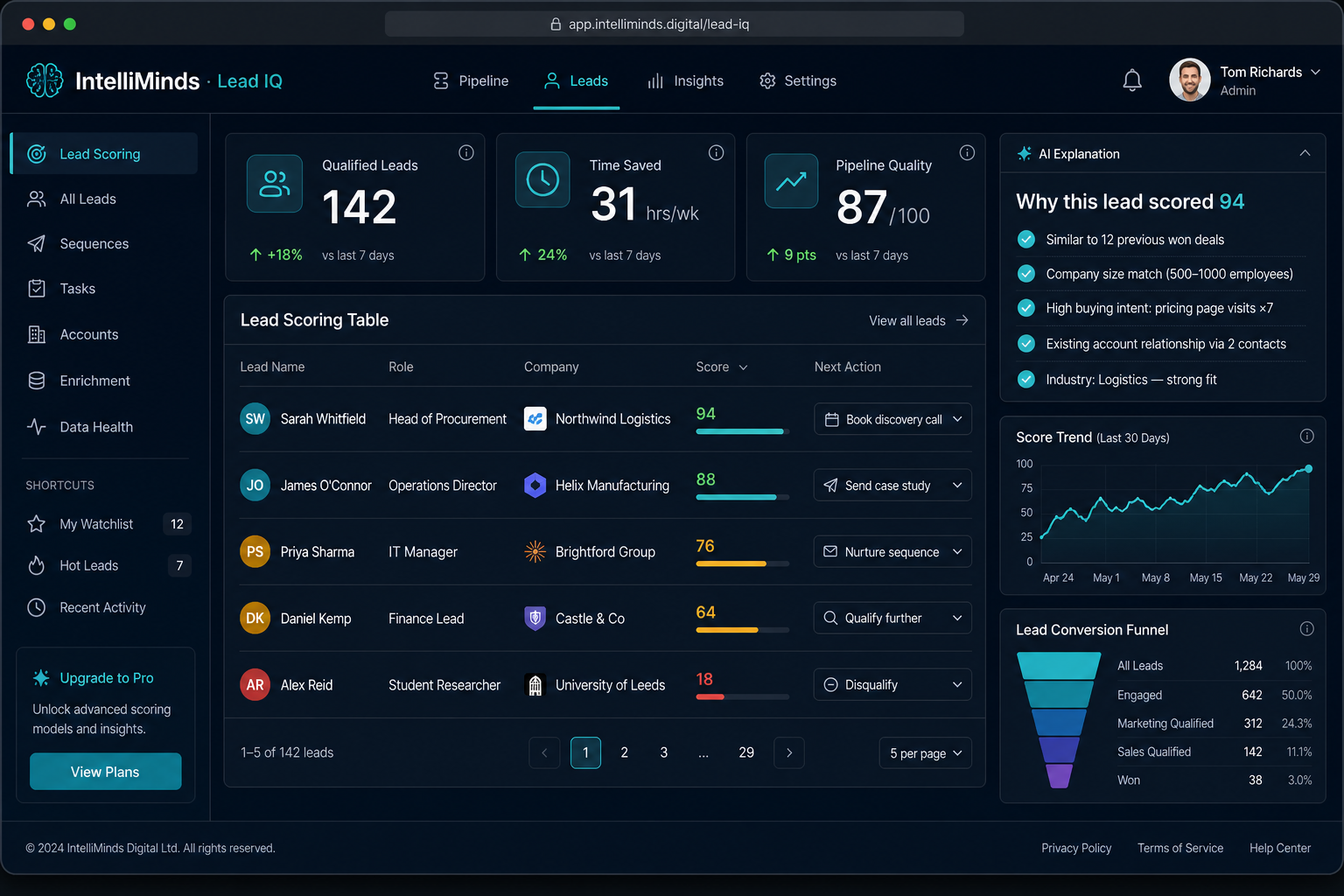
Most B2B sales teams are buried in inbound. SDRs work down the list in the order it arrived, spending the same effort on a cold student researcher as on a head of procurement at a target account. The result is wasted hours and missed deals.
We train a qualification model on your real CRM history — the deals that closed, the deals that didn't, the patterns hidden in the data. The output is a simple score and a clear reason: this lead looks like deals you've won, here's why.
The system analyses historical CRM data, opportunity outcomes, engagement signals and account characteristics to identify the patterns associated with successful sales opportunities. Rather than acting as a black box, the platform provides explainable recommendations so sales teams understand why a lead has been prioritised — and can override the score sensibly when their judgement says otherwise.
How a raw inbound lead becomes a prioritised, explainable opportunity sitting at the top of an SDR's queue.
Inbound lead
Form fill, demo request or marketing-sourced contact
CRM data
Account, firmographic and engagement context retrieved
Win/loss analysis
Historical opportunity outcomes compared and pattern-matched
AI qualification engine
Score generated with explainable contributing signals
Score + explanation
SDR sees the reasons behind every prioritised lead
SDR prioritisation
Highest-fit leads surface to the top of the queue
Sales conversation
Right SDR, right lead, right time — with context
What a production-grade AI sales qualification platform looks like once it is built, deployed and in daily use by a revenue team.
Prioritises inbound leads based on the historical patterns that correlate with closed-won deals.
Shows the specific reasons a lead scored highly — or was deprioritised — so SDRs can trust and challenge the output.
Works alongside existing Salesforce, HubSpot or Dynamics workflows — no rip-and-replace required.
Identifies accounts that resemble previous successful customers across industry, size and behaviour.
Spots behavioural indicators — pricing visits, repeat engagement, content downloads — that correlate with intent.
Helps teams focus effort where it is most likely to convert — less guesswork, more conversations that matter.
Same volume of inbound. Very different shape of the SDR day.
SDRs spend their time on leads that look like past wins. Sales managers stop guessing about pipeline quality. The bottom third of inbound — the people who would never have bought — quietly stops eating the calendar.
High-value prospects get a call within hours, not days.
Sales teams focus on opportunities that resemble past wins, not noise.
Less time spent reviewing low-value leads, more time having real conversations.
Reduced dependence on individual judgement — the same standard, across every SDR.
Lead scoring models are easy to demonstrate. Building a secure, reliable and maintainable sales intelligence platform that integrates with real CRM workflows is significantly harder.
We help organisations design, deploy, host and support AI-powered sales qualification systems that deliver value in production — not just in demos.
A layered architecture — from the CRM of record through to monitored, managed AI in production.
Salesforce, HubSpot or Dynamics — your existing system of record.
Historical opportunity analysis, feature engineering and signal aggregation.
Lead scoring models with explainable recommendations and override controls.
Lead queue, SDR interface and the explanation panel your team actually uses.
Managed infrastructure, drift monitoring and ongoing model optimisation.
SSO, role-based access and audit trails appropriate for enterprise sales data.
A 30-minute call. No pitch deck, no slideware. If we can help, we'll tell you how. If we can't, we'll point you somewhere that can.